· Letter Case Converter Team · Text Formatting · 4 min read
How to Format Text for Clean, Publish-Ready Content
Practical text-formatting workflow for Format text for clean, publish-ready content, with clear steps, validation checks, and fast online execution.
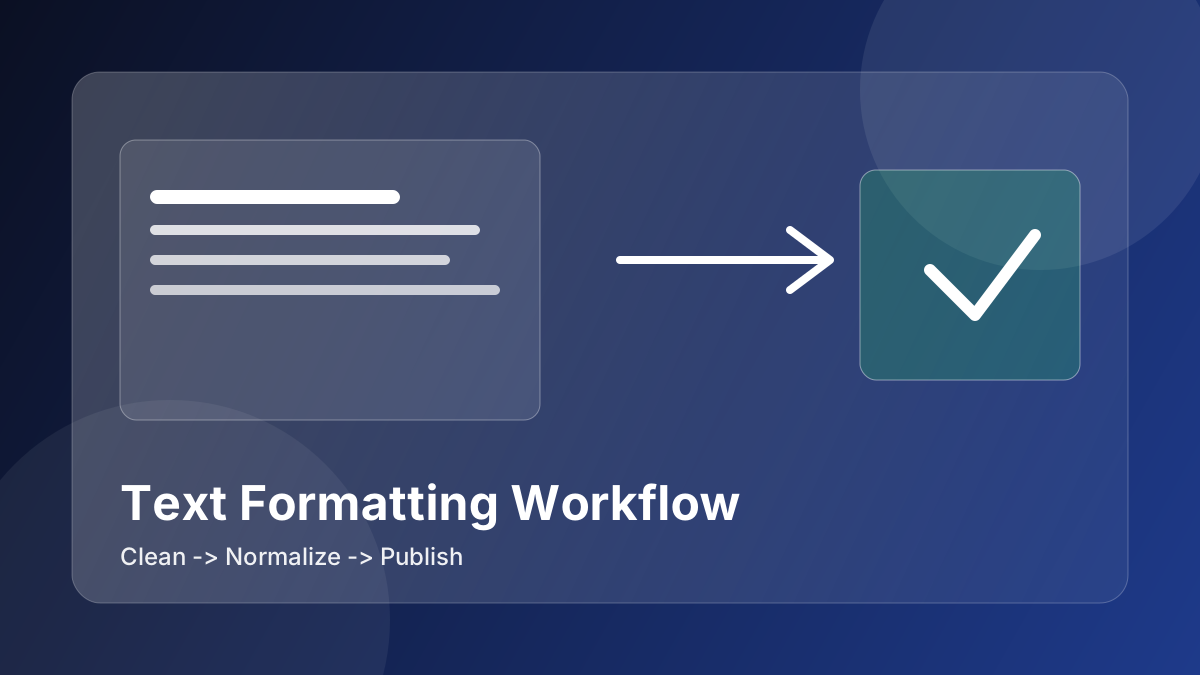
Most readers arrive here because they need a fast and reliable way to solve the task online.
A practical workflow to clean messy text from docs, chats, and CMS exports so your team can publish faster with fewer revisions. The goal is to reduce trial-and-error and give you a repeatable process you can reuse.
Quick Answer
For the fastest reliable result:
- start with a small sample before you run a full batch
- apply one transformation at a time so errors are easy to isolate
- validate output in the same environment where it will be published or used
This pattern is simple but removes most avoidable rework.
Step-by-Step (Online)
- Define the exact result you need and prepare a representative input sample.
- Run the main transformation with Remove Extra Spaces.
- Clean supporting structure or edge cases with Trim Whitespace.
- Verify the final output with Remove Line Breaks before publishing or sharing.
- Compare input and output side by side, then document the settings used.
- Only after sample validation, process the full dataset.
Real Use Cases
- clean messy copy from docs and CMS
- normalize text before publishing
- reduce manual editing time
FAQ
What is the safest starting point?
Start with a small text sample and define exact output rules before processing long documents. This helps when working on Format Text for Clean, Publish-Ready Content.
How do I avoid accidental content changes?
Apply one transformation at a time and compare input/output after each step.
Should I normalize whitespace first?
Yes. Cleaning hidden spaces and line breaks early prevents downstream formatting errors.
Can I use these tools for multilingual text?
Yes, but validate punctuation, encoding, and locale-specific characters before final publish.
How do I verify the final result?
Run a quick diff check and review formatting in the destination app or CMS.
What is the most common mistake?
Combining too many transformations in one pass without intermediate validation.
Do I need to keep the original copy?
Always keep the original input so you can roll back if formatting rules were incorrect.
How can teams make this repeatable?
Document your formatting order and keep reusable presets for recurring text tasks.
Related Tools
Related Reading
- Case Conversion Style Guide for Consistent Brand Voice
- Build a Low-Friction Content QA Process with Text Tools
- Developer Productivity Text Tools Stack for Daily Work
Explore This Topic Cluster
- Text Formatting Topic Cluster
- Pillar Guide: How to Format Text for Clean, Publish-Ready Content
- Text Formatting Articles
- Text Formatting Tools
Detailed Notes
Most formatting problems are not writing problems. They are handoff problems.
A draft starts in a note app, gets copied into a doc, then into a CMS, then into a social scheduler. Every transfer introduces small defects: double spaces, broken line breaks, random HTML tags, and inconsistent case. None of these errors are difficult by themselves, but together they slow publishing and create avoidable review rounds.
This guide gives you a repeatable text formatting workflow that works for content teams, solo creators, and developers who ship copy inside products.
Step 1: Normalize Raw Input First
Do not edit meaning before you clean structure. If you rewrite too early, you lose track of what changed.
Start with:
This first pass should produce readable, stable text that is easy to compare with the source.
Step 2: Strip Non-Essential Formatting
If content came from a rich text editor or website, remove hidden formatting before final edits.
Use:
This reduces rendering surprises when pasting into CMS fields, product UIs, or markdown-based systems.
Step 3: Enforce Case and Heading Rules
Case inconsistency makes even good writing look unpolished.
Use:
At this stage, apply your style guide. If you do not have one, define simple defaults: sentence case for body copy, title case for marketing headlines, and protected terms for brand names.
Step 4: Run SEO and Readability QA
Before publishing, validate search-facing and engagement-facing metadata.
Use:
These checks prevent common launch issues: overlong snippets, keyword stuffing, and content blocks that are too dense for the channel.
Step 5: Keep a Lightweight Diff Habit
For high-impact pages, keep a copy of:
- raw source
- cleaned source
- final published copy
This helps when someone asks why wording or structure changed. It also makes future updates faster.
Common Failure Patterns
1. Formatting and rewriting happen in one pass
Result: meaning drifts and reviewers cannot isolate structural edits.
2. Teams skip destination testing
Text that looks fine in a tool may break in a CMS, ad platform, or email builder.
3. No repeatable checklist
Without a fixed sequence, output quality depends on who touched the content last.
A Simple Team Checklist
Use this before every publish:
- Normalize spaces and line breaks.
- Remove unwanted formatting.
- Apply case rules.
- Run metadata and keyword checks.
- Preview in target platform.
- Store source and final copy for traceability.
Why This Workflow Improves Velocity
A good workflow does not just clean text. It reduces decision fatigue.
When contributors know exactly what happens in each stage, they make fewer ad-hoc edits. QA becomes faster. Review comments become specific. Publishing becomes predictable.
That is where formatting turns from a tedious task into a productivity advantage.