· Letter Case Converter Team · Developer Productivity · 3 min read
Build a Low-Friction Content QA Process with Text Tools
Practical developer workflow for Build a low-friction content qa process with text tools, with repeatable validation steps and lightweight tools for faster delivery.
Most readers arrive here because they need a fast and reliable way to solve the task online.
A lean QA process for content teams that reduces formatting defects without slowing publishing. The goal is to reduce trial-and-error and give you a repeatable process you can reuse.
Quick Answer
For the fastest reliable result:
- start with a small sample before you run a full batch
- apply one transformation at a time so errors are easy to isolate
- validate output in the same environment where it will be published or used
This pattern is simple but removes most avoidable rework.
Step-by-Step (Online)
- Define the exact result you need and prepare a representative input sample.
- Run the main transformation with Remove Extra Spaces.
- Clean supporting structure or edge cases with Remove Line Breaks.
- Verify the final output with Plain Text Converter before publishing or sharing.
- Compare input and output side by side, then document the settings used.
- Only after sample validation, process the full dataset.
Real Use Cases
- debug faster with cleaner payloads
- normalize config and logs
- reduce handoff issues
FAQ
How do I choose the right tool first?
Pick the tool that validates assumptions fastest, then chain supporting tools only as needed. This helps when working on Build a Low-Friction Content QA Process with Text Tools.
What is the best way to reduce rework?
Define pass/fail criteria before transformation so output can be verified immediately.
Should I automate from day one?
Automate after manual flow is stable and edge cases are documented.
How do I make handoffs clearer?
Share input sample, exact steps, output expectation, and validation checks in one short note.
Can these workflows support incident response?
Yes. They help with quick parsing, normalization, and reproducible checks under time pressure.
How do I prevent formatting drift in teams?
Use a shared style baseline and run the same validation steps before merge or publish.
What is the common failure pattern?
Skipping intermediate checks and discovering errors only at final integration.
How do I keep workflows lightweight?
Use minimal steps, document defaults, and only add complexity when a recurring failure appears.
Related Tools
Related Reading
- Text Formatting Workflow for Clean, Publish-Ready Content
- SEO Writing Framework: From Search Intent to Snippet
- Developer Productivity Text Tools Stack for Daily Work
Explore This Topic Cluster
- Developer Productivity Topic Cluster
- Pillar Guide: How to Build a Daily Text Tools Stack for Developer Productivity
- Developer Productivity Articles
- Developer Productivity Tools
Detailed Notes
Most content QA systems fail for one reason: they are too heavy to run on every publish.
The solution is not removing QA. It is designing a low-friction process that teams can apply consistently.
This guide gives you a lightweight QA sequence powered by focused text tools.
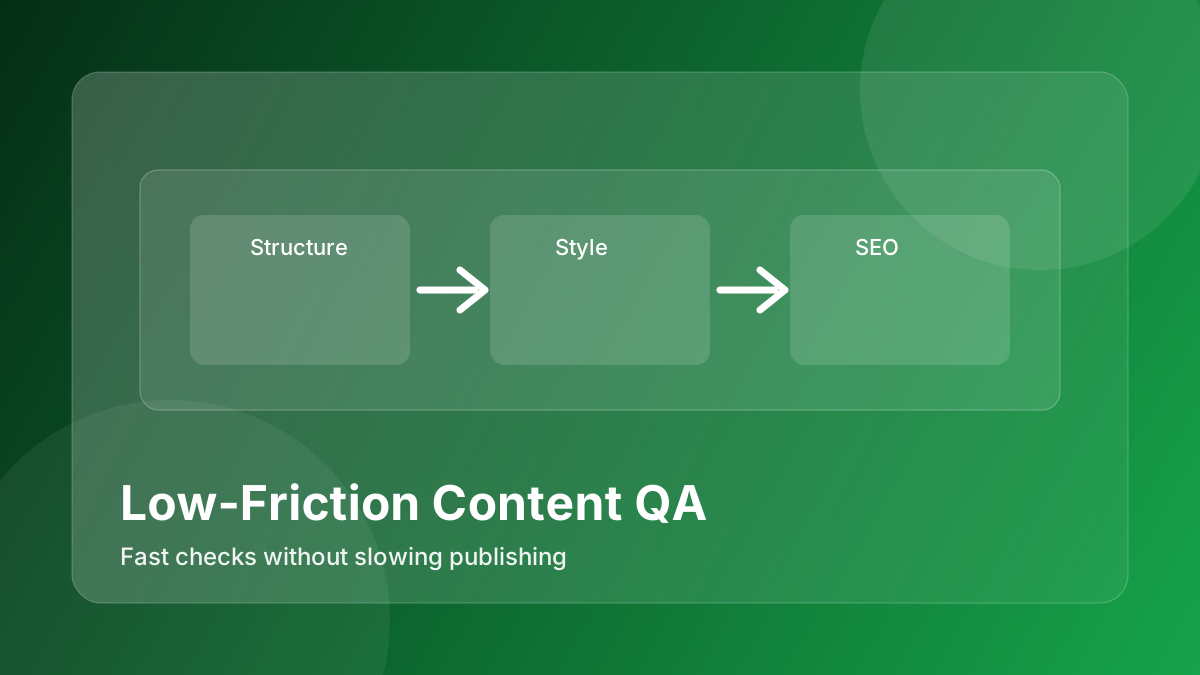
The 15-Minute QA Model
Split QA into three passes:
Pass 1: Structural Cleanup (5 minutes)
Goal: remove obvious formatting defects.
Pass 2: Style and Messaging Consistency (5 minutes)
Goal: enforce clarity and consistent voice.
Pass 3: Search and Delivery Readiness (5 minutes)
Goal: improve discoverability and channel fit.
Assign Ownership, Not Just Steps
Low-friction QA still needs accountability.
Recommended ownership:
- writer: pass 1
- editor: pass 2
- SEO/content lead: pass 3
This keeps responsibility clear without creating a heavy approval chain.
What to Track Weekly
Track only 3 metrics:
- number of post-publish formatting fixes,
- average review rounds per article,
- time from draft-ready to publish.
If these move in the right direction, your QA model works.
Common Mistakes
- Adding too many checklist items at once.
- Skipping QA when deadlines are tight.
- Treating QA as final gate instead of iterative habit.