· Letter Case Converter Team · SEO Writing · 4 min read
How to Write SEO Content: From Search Intent to Better Snippets
Practical SEO writing workflow for Write SEO content: from search intent to better snippets, including intent mapping, on-page checks, and snippet optimization.
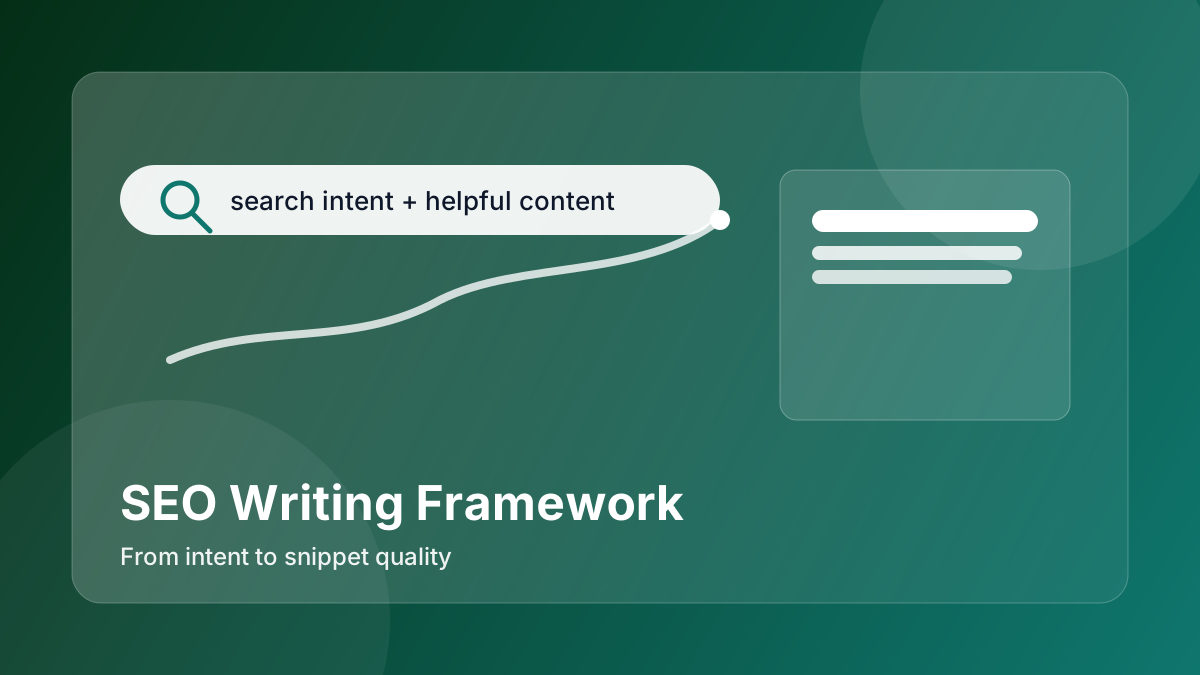
A practical SEO writing framework that connects search intent, content structure, and metadata quality. The goal is to keep your workflow simple: transform, validate, then publish or share.
Quick Answer
For the fastest reliable result:
- start with a small sample before you run a full batch
- apply one transformation at a time so errors are easy to isolate
- validate output in the same environment where it will be published or used
This pattern is simple but removes most avoidable rework.
Step-by-Step (Online)
- Define the exact result you need and prepare a representative input sample.
- Run the main transformation with Reading Time Calculator.
- Clean supporting structure or edge cases with Headline Capitalization.
- Verify the final output with Sentence Case Converter before publishing or sharing.
- Compare input and output side by side, then document the settings used.
- Only after sample validation, process the full dataset.
Real Use Cases
- optimize on-page elements before publish
- clean metadata and URL signals
- avoid indexing and snippet mistakes
FAQ
How do I match search intent quickly?
Define one primary user question first, then structure headings and metadata to answer it clearly. This helps when working on Write SEO Content: From Search Intent to Better Snippets.
What should I optimize first: title or body?
Start with page purpose and headings, then refine title and meta description for click-through.
How long should a meta description be?
Keep it concise and useful; prioritize clarity and relevance over strict character counting.
How do I reduce keyword stuffing risk?
Use natural phrasing, semantic variations, and focus on solving the user problem directly.
When should I update an older article?
Update when search intent shifts, SERP snippets underperform, or linked tools/content changed.
How do I validate SEO output before publish?
Check title, description, heading hierarchy, internal links, and URL cleanliness in one pass.
Does internal linking really matter?
Yes. Strong internal links improve crawl paths and help users reach related solutions faster.
What is a practical content quality signal?
Clear how-to structure with direct answers, examples, and maintained freshness over time.
Related Tools
Related Reading
- Meta Description Writing Playbook with Real Examples
- Sentence Case vs Title Case for Headlines and UI Copy
- Build a Low-Friction Content QA Process with Text Tools
Explore This Topic Cluster
- SEO Writing Topic Cluster
- Pillar Guide: How to Write SEO Content: From Search Intent to Better Snippets
- SEO Writing Articles
- SEO Writing Tools
Detailed Notes
SEO writing is not about inserting keywords into paragraphs. It is about matching user intent with useful, scannable, and trustworthy content.
If content misses intent, no amount of polishing fixes performance.
This framework helps you move from query intent to publish-ready page structure.
Step 1: Define Intent Before Drafting
Start with one dominant intent:
- informational
- commercial investigation
- transactional
- navigational
If a page tries to satisfy all four, it usually satisfies none.
Step 2: Build an Intent-Aligned Outline
Create sections that answer predictable reader questions in order:
- context/problem
- method/options
- recommendations
- next action
Then estimate consumption cost with Reading Time Calculator.
Step 3: Write for Clarity First, Optimization Second
Draft naturally. Do not optimize sentence-by-sentence while drafting.
After first draft:
- normalize title style with Headline Capitalization
- clean body case with Sentence Case Converter
- rewrite unclear lines with Sentence Rewriter
Step 4: Validate Keyword Distribution
Use Keyword Counter to check coverage and overuse.
What you want:
- target phrase appears where expected (title, intro, key sections)
- supporting terms appear naturally
- no repetitive stuffing pattern
Step 5: Tune Snippet Layer
Use Meta Description Checker to ensure metadata is concise and useful.
A good meta description is not just “within limit”; it communicates a clear reason to click.
Step 6: Run Text Cleanup Before Publishing
Formatting defects can hurt credibility and readability.
Final cleanup stack:
Common SEO Writing Mistakes
- Writing to tool metrics instead of reader needs.
- Over-optimizing intros while leaving body sections thin.
- Treating metadata as an afterthought.
- Shipping pages with inconsistent casing and structure.
A Practical Publish Checklist
- Intent is explicit.
- Outline matches user journey.
- Keyword distribution is natural.
- Metadata is clear and concise.
- Formatting is clean in the final platform.
This checklist sounds simple, but it removes most avoidable SEO writing failures.