· Letter Case Converter Team · Case Conversion · 3 min read
Sentence Case vs Title Case for Headlines and UI Copy
Practical case-conversion workflow for Sentence case vs title case for headlines and UI copy, with consistency rules, exception handling, and quality checks.
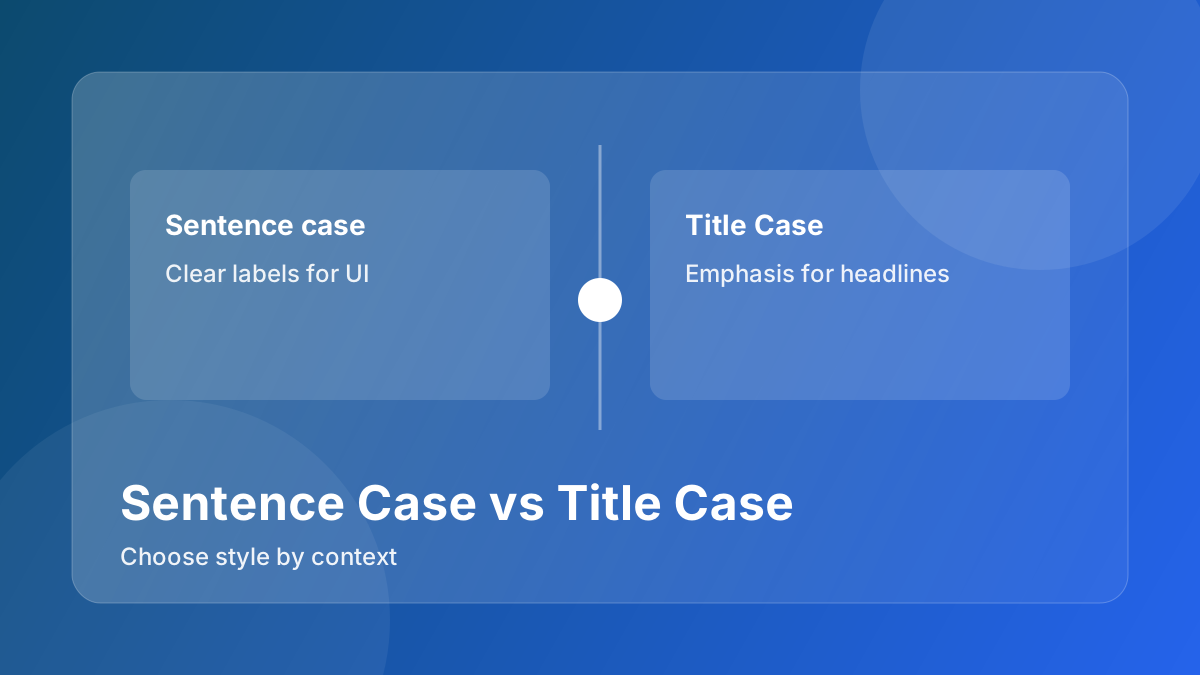
How to choose between sentence case and title case for readability, brand tone, and conversion-focused interfaces. The goal is to keep your workflow simple: transform, validate, then publish or share.
Quick Answer
For the fastest reliable result:
- start with a small sample before you run a full batch
- apply one transformation at a time so errors are easy to isolate
- validate output in the same environment where it will be published or used
This pattern is simple but removes most avoidable rework.
Step-by-Step (Online)
- Define the exact result you need and prepare a representative input sample.
- Run the main transformation with Sentence Case Converter.
- Clean supporting structure or edge cases with Headline Capitalization.
- Verify the final output with Remove Extra Spaces before publishing or sharing.
- Compare input and output side by side, then document the settings used.
- Only after sample validation, process the full dataset.
Real Use Cases
- enforce consistent capitalization
- standardize headings and UI copy
- protect brand term casing
FAQ
When should I use sentence case vs title case?
Use sentence case for UI labels and support copy; use title case for headlines and major content headings. This helps when working on Sentence Case vs Title Case for Headlines and UI Copy.
How do I avoid brand-name corruption?
Whitelist brand terms and acronyms before applying automatic case conversion.
Can I apply conversion to bulk content?
Yes, but validate a sample first and keep protected terms unchanged across all records.
What is the best way to handle acronyms?
Define acronym rules explicitly so tools do not convert them into standard words.
How do I keep consistency across channels?
Use one style guide and apply the same conversion logic for web, email, and product surfaces.
Should I convert everything automatically?
No. Always review names, legal terms, and UI tokens that may require manual casing.
How do I verify output quality?
Run spot checks on headings, labels, and metadata where case errors are most visible.
What is a practical team process?
Store preferred case presets and review exceptions in a shared editorial checklist.
Related Tools
Related Reading
- Case Conversion Style Guide for Consistent Brand Voice
- Meta Description Writing Playbook with Real Examples
- Developer Productivity Text Tools Stack for Daily Work
Explore This Topic Cluster
- Case Conversion Topic Cluster
- Pillar Guide: How to Standardize Case Conversion for a Consistent Brand Voice
- Case Conversion Articles
- Case Conversion Tools
Detailed Notes
Sentence case and title case are both valid. The wrong choice is inconsistency.
Teams often debate style in abstract terms, but the right decision depends on context: interface density, audience expectation, and brand voice.
Quick Rule of Thumb
- Use sentence case for interfaces, help text, and product copy that should feel conversational.
- Use title case for editorial headlines, campaigns, and high-visibility promotional modules.
Then apply this consistently across each surface.
Why Sentence Case Often Wins in Product UI
Sentence case improves scanning in dense layouts:
- less visual noise
- more natural reading flow
- better fit for multilingual products
For product teams, this often reduces cognitive load.
Why Title Case Still Works for Marketing
Title case can add emphasis in promotional environments where visual hierarchy matters:
- landing page hero headlines
- ad variants
- social campaign cards
The key is using it intentionally, not everywhere.
Practical Conversion Workflow
Use tools, then review context:
After conversion, always preview where content will appear. Some lines that look fine in editor feel awkward in real UI.
Decision Matrix
Choose sentence case when:
- interface is functional and task-oriented,
- copy appears repeatedly in components,
- tone should be calm and direct.
Choose title case when:
- page is campaign-heavy,
- headline must stand out strongly,
- style guide requires it for editorial content.