· Letter Case Converter Team · HTML Best Practices · 4 min read
HTML Semantic Structure Checklist for Content Pages
Practical HTML workflow for HTML semantic structure for content pages, with structure checks, validation steps, and safer publishing practices.
If you searched for this topic, you likely want clear steps you can apply immediately, not theory-heavy notes.
Use this semantic HTML checklist to improve accessibility, SEO clarity, and maintainable page structure. The goal is to help you get a correct output on the first pass and avoid rework.
Quick Answer
For the fastest reliable result:
- start with a small sample before you run a full batch
- apply one transformation at a time so errors are easy to isolate
- validate output in the same environment where it will be published or used
This pattern is simple but removes most avoidable rework.
Step-by-Step (Online)
- Define the exact result you need and prepare a representative input sample.
- Run the main transformation with HTML Formatter.
- Clean supporting structure or edge cases with Plain Text Converter.
- Verify the final output with Headline Capitalization before publishing or sharing.
- Compare input and output side by side, then document the settings used.
- Only after sample validation, process the full dataset.
Real Use Cases
- format and validate HTML snippets
- prevent markup regressions
- ship cleaner templates
FAQ
What is the first HTML check I should run?
Validate structure and indentation first, then review headings, links, and metadata. This helps when working on HTML Semantic Structure Checklist for Content Pages.
How do I avoid broken embeds in CMS?
Sanitize snippet input, close tags properly, and preview the rendered output before publish.
Should I format HTML before or after editing?
Format before review so structural issues become visible early and easier to fix.
How do I test semantic quality quickly?
Confirm heading order, landmark tags, and descriptive link text in one checklist pass.
Can online formatters replace full linting?
They help for fast cleanup, but production templates should still use project linting rules.
How do I prevent copy-paste markup issues?
Normalize entities, remove hidden characters, and reformat code before saving to CMS.
What is a reliable pre-publish validation step?
Render the final snippet in target context and verify spacing, links, and metadata behavior.
How do teams keep HTML standards consistent?
Use shared snippet patterns and a lightweight review checklist for every page type.
Related Tools
Related Reading
- Practical HTML Formatting Best Practices for Modern Teams
- SEO Writing Framework: From Search Intent to Snippet
- Build a Low-Friction Content QA Process with Text Tools
Explore This Topic Cluster
- HTML Best Practices Topic Cluster
- Pillar Guide: How to Format HTML Properly: Best Practices for Modern Teams
- HTML Best Practices Articles
- HTML Tools
Detailed Notes
A content page can look visually perfect and still be structurally weak.
When HTML semantics are wrong, screen readers lose context, search engines misread page intent, and future edits become riskier than they should be.
This checklist helps you audit and improve semantics without turning every page into a full refactor.
Semantic Baseline Checklist
Landmark structure
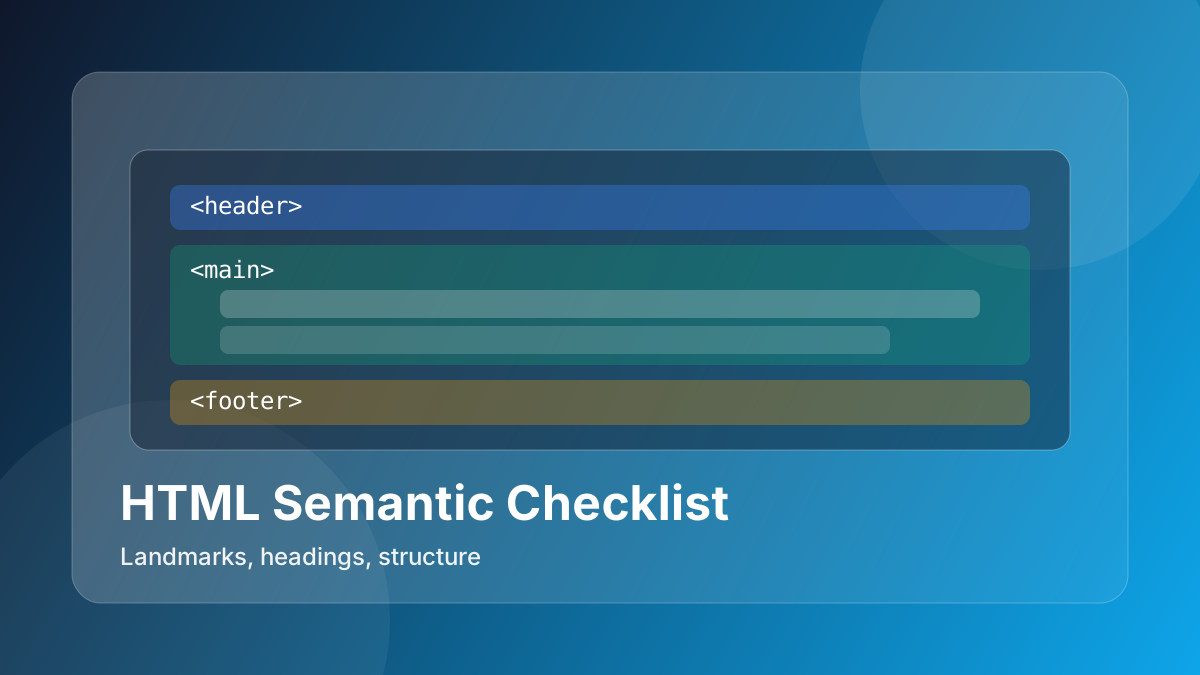
Each page should have a clear hierarchy:
<header>for top identity/navigation blocks<main>for core page content<footer>for closing, legal, or utility links
Heading order
Do not skip heading levels without reason. A clear heading tree improves navigation for humans and assistive tech.
Meaningful lists and tables
If content is a real list, use list elements. If data is tabular, use table semantics.
Link clarity
Anchor text should communicate destination, not only “click here”.
Fast Audit Workflow
- Format source with HTML Formatter.
- Clean pasted blocks with Plain Text Converter.
- Normalize headings with Headline Capitalization.
These tools do not replace semantic judgment, but they reduce noise so structural problems are easier to see.
SEO Benefit of Better Semantics
Semantics do not magically rank pages, but they reduce ambiguity:
- clearer heading signals
- better snippet extraction quality
- improved internal linking context
Pair this with on-page clarity checks using:
Common Semantic Mistakes
- Multiple visual “titles” with no real
<h1>strategy. - Div-based pseudo-lists for real list content.
- Buttons used for navigation where links should be used.
- Generic link anchors that hide intent.
Practical “Done” Criteria
A content page is structurally acceptable when:
- landmarks are present and logical,
- heading tree is consistent,
- links are descriptive,
- list/table semantics match the content type,
- page can be understood without CSS.
If your team uses these criteria in PR review, semantic quality improves quickly.