· Letter Case Converter Team · Developer Productivity · 3 min read
Encoding and Formatting Debug Playbook for Frontend Developers
Practical developer workflow for Encoding and formatting debug for frontend developers, with repeatable validation steps and lightweight tools for faster delivery.
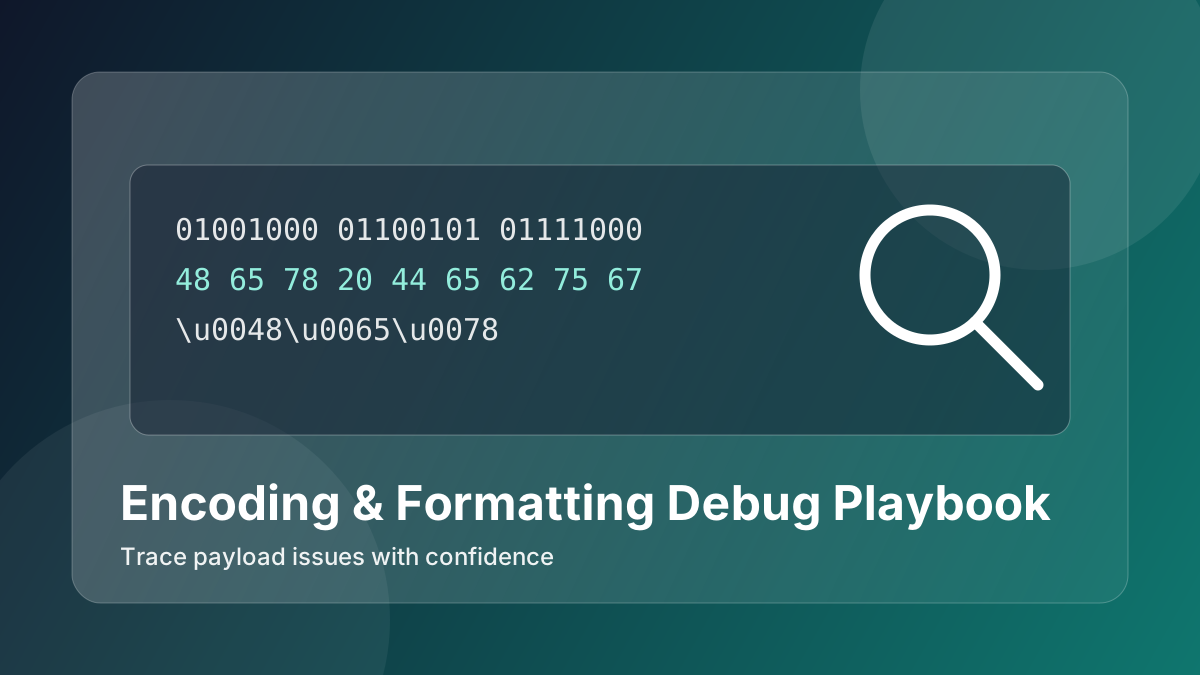
A practical playbook to debug payload, encoding, and formatting issues in frontend workflows. The goal is to keep your workflow simple: transform, validate, then publish or share.
Quick Answer
For the fastest reliable result:
- start with a small sample before you run a full batch
- apply one transformation at a time so errors are easy to isolate
- validate output in the same environment where it will be published or used
This pattern is simple but removes most avoidable rework.
Step-by-Step (Online)
- Define the exact result you need and prepare a representative input sample.
- Run the main transformation with Trim Whitespace.
- Clean supporting structure or edge cases with Remove Duplicate Lines.
- Verify the final output with Text Cleaner before publishing or sharing.
- Compare input and output side by side, then document the settings used.
- Only after sample validation, process the full dataset.
Real Use Cases
- debug faster with cleaner payloads
- normalize config and logs
- reduce handoff issues
FAQ
How do I choose the right tool first?
Pick the tool that validates assumptions fastest, then chain supporting tools only as needed. This helps when working on Encoding and Formatting Debug Playbook for Frontend Developers.
What is the best way to reduce rework?
Define pass/fail criteria before transformation so output can be verified immediately.
Should I automate from day one?
Automate after manual flow is stable and edge cases are documented.
How do I make handoffs clearer?
Share input sample, exact steps, output expectation, and validation checks in one short note.
Can these workflows support incident response?
Yes. They help with quick parsing, normalization, and reproducible checks under time pressure.
How do I prevent formatting drift in teams?
Use a shared style baseline and run the same validation steps before merge or publish.
What is the common failure pattern?
Skipping intermediate checks and discovering errors only at final integration.
How do I keep workflows lightweight?
Use minimal steps, document defaults, and only add complexity when a recurring failure appears.
Related Tools
Related Reading
- Developer Productivity Text Tools Stack for Daily Work
- Practical HTML Formatting Best Practices for Modern Teams
- Text Formatting Workflow for Clean, Publish-Ready Content
Explore This Topic Cluster
- Developer Productivity Topic Cluster
- Pillar Guide: How to Build a Daily Text Tools Stack for Developer Productivity
- Developer Productivity Articles
- Developer Productivity Tools
Detailed Notes
Frontend bugs often look visual, but many are data-shape bugs.
The UI breaks because incoming text is malformed, badly encoded, or unexpectedly formatted. If you debug only at component level, you miss the real cause.
This playbook helps you isolate text-related issues quickly.
Step 1: Stabilize the Input
Before touching UI code, normalize the sample payload.
Use:
Now you can reason about the payload without noise.
Step 2: Verify Encoding Assumptions
Check how data is represented in transport and in runtime.
Use:
If decoded and re-encoded values diverge, you found a high-probability bug source.
Step 3: Format Markup for Inspection
If payload contains HTML fragments, run:
Then inspect semantic structure and unsafe fragments.
Step 4: Create a Minimal Repro String
Extract the smallest text sample that still reproduces the issue. Keep:
- input
- transform chain
- output
- expected output
This makes handoff to backend or QA much faster.
Step 5: Add Regression Notes
For recurring bugs, add short notes in your repo wiki:
- symptom,
- root cause,
- test sample,
- validated fix.
You do not need a long document. You need reusable patterns.